Santa’s 3D Wall Mug Charm: Integrating High-Resolution Sublimation Assets into Your Production Workflow
In the competitive landscape of seasonal merchandise and personalized gift creation, the distinction between amateur output and professional-grade products often lies in asset quality and workflow efficiency. Santa’s 3D Wall Mug Charm represents more than just a festive graphic; it is a specialized digital asset designed to streamline the sublimation printing process for creators, small business owners, and hobbyists. Understanding how to effectively integrate this specific type of high-resolution template into your existing production line is essential for maximizing both print quality and operational throughput during peak holiday seasons.
This digital resource serves as a foundational element in the broader ecosystem of dye-sublimation manufacturing. Rather than viewing it as an isolated image file, successful operators treat it as a calibrated component within a larger system involving color management, substrate preparation, and heat press mechanics. The utility of Santa’s 3D Wall Mug Charm extends across multiple phases of a project, from initial design conceptualization and mockup generation to final quality control and product listing optimization.
Pre-Production Assessment and Technical Compatibility
Before initiating any print run or incorporating Santa’s 3D Wall Mug Charm into a new collection, a rigorous technical assessment is mandatory. This phase ensures that your hardware and software environment can fully leverage the asset's specifications without introducing artifacts or color shifts. The files are optimized specifically for sublimation workflows, meaning they interact differently with RIP software and printer drivers than standard web graphics.
- Software Proficiency: Effective utilization requires a strong grasp of sublimation concepts and compatible editing software. Users must be comfortable managing layers, adjusting color profiles, and handling transparency in PNG formats before purchase.
- Hardware Verification: Ensure your sublimation printer is calibrated for the specific ink set and paper type you intend to use. The 300 DPI resolution demands precise nozzle performance to render the 3D depth effects correctly.
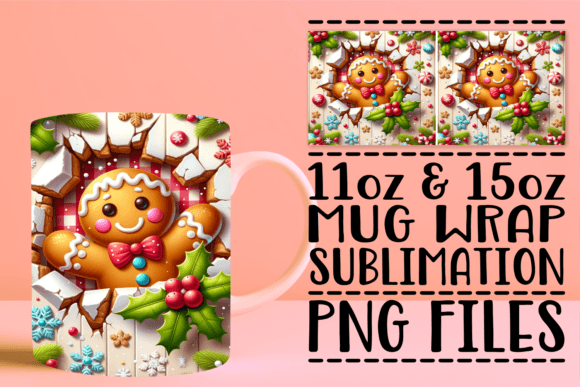
- Substrate Matching: Verify that your mug blanks possess the correct polymer coating. The charm design is sized for 11oz and 15oz wraps, but the curvature and coating quality of the blank directly impact how the 3D illusion translates to the physical surface.
This preparatory stage eliminates costly trial-and-error later in the process. Because support for this asset is exclusively available for file-specific issues rather than general process guidance, verifying your own equipment readiness is a critical risk mitigation strategy. Professionals understand that asset integrity is only one variable; the entire chain from digital file to heated platen must be validated independently.
Asset Specifications and File Management Protocols
Organizational efficiency begins with proper file management. Upon download, you receive two distinct PNG files optimized for sublimation printing. These are not generic clip art files; they are production-ready templates featuring 300 DPI high-resolution image quality. Maintaining this resolution throughout the editing pipeline is non-negotiable. Resampling or compressing these files during the customization phase will degrade the subtle shading required to create the "wall charm" dimensional effect.
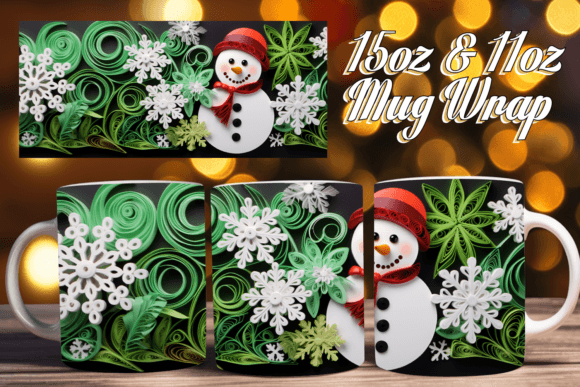
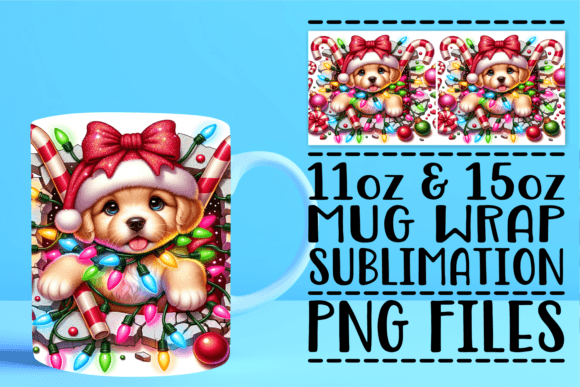
The inclusion of both 11oz and 15oz variants addresses a common logistical bottleneck in mug production. Many designers waste valuable time manually resizing single-dimension assets, which often leads to distortion or pixelation. By providing pre-sized templates, Santa’s 3D Wall Mug Charm allows for rapid scaling across product lines. When integrating these files into your asset library, maintain clear naming conventions that distinguish between size variants and edited versions. This prevents version control errors during high-volume batch processing where switching between mug sizes is frequent.
Furthermore, the PNG format supports transparency, which is vital for layering this charm over custom backgrounds or textured patterns. In a professional workflow, this flexibility allows for rapid iteration. You can test various background colors against the 3D element without re-rendering the primary asset, significantly reducing design turnaround time for custom orders or A/B testing marketing visuals.
Integration into Creative and Manufacturing Workflows
Santa’s 3D Wall Mug Charm functions at three distinct stages of the product lifecycle: design, production, and marketing. Recognizing these touchpoints helps maximize the return on investment for the digital asset.
Design and Customization Phase
During the creative phase, the high-resolution template acts as a constraint-free canvas. Because the files are easily customizable, they fit seamlessly into workflows that require personalization. For example, a creator fulfilling bulk corporate orders can retain the core 3D Santa element while swapping out background elements or adding company logos in negative space. The 300 DPI quality ensures that even when additional elements are composited, the overall file remains print-ready. This modularity transforms a single purchase into a versatile design system capable of generating dozens of unique SKUs.
Production and Quality Control
In the manufacturing stage, consistency is paramount. The precise sizing of the included wraps reduces alignment errors during the pressing process. When the digital template matches the physical dimensions of the mug wrap exactly, operators spend less time adjusting registration marks and more time producing viable units. Additionally, the high-fidelity nature of the source file aids in quality control. Defects such as banding, ghosting, or color inconsistency become immediately apparent when compared against the pristine digital master, allowing for faster troubleshooting of heat press temperature, pressure, or dwell time settings.
Marketing and Listing Optimization
Post-production, the same high-quality assets used for printing serve dual purposes in digital marketing. The 300 DPI resolution is sufficient for creating zoom-enabled product listings on e-commerce platforms. Shoppers need to see texture and depth to appreciate a 3D wall charm design; low-resolution thumbnails fail to convey this value proposition. Using the original PNG files for mockups ensures that the online representation accurately reflects the physical product, reducing return rates caused by unmet expectations. This alignment between digital asset and physical outcome builds brand trust and reinforces professional credibility.
Operational Considerations and Support Boundaries
Integrating third-party digital assets requires a clear understanding of vendor support boundaries to maintain operational continuity. It is essential to recognize that guidance on sublimation processes, printer settings, or heat press techniques falls outside the scope of support for this product. Assistance is strictly limited to addressing issues specifically related to the downloaded files themselves.
This distinction encourages a self-sufficient operational model. Successful users typically maintain their own knowledge base regarding sublimation best practices, ICC profiles, and equipment maintenance. If you encounter challenges with Santa’s 3D Wall Mug Charm, first isolate whether the issue stems from the file or the process. Corrupted downloads, missing layers, or resolution discrepancies are valid support tickets. Conversely, color mismatches, blurred transfers, or adhesion failures are typically process variables requiring independent troubleshooting.
For entrepreneurs and freelancers, this boundary actually enhances long-term sustainability. Relying on asset vendors for technical process support creates a dependency that scales poorly. By mastering the sublimation workflow independently and utilizing high-quality assets like this solely for their intended design purpose, businesses build resilient internal competencies. Should file-specific issues arise, the vendor is committed to providing responsive assistance to ensure the asset performs as advertised, ensuring your production schedule remains uninterrupted.
Long-Term Value and Seasonal Scalability
While Santa’s 3D Wall Mug Charm is inherently seasonal, its integration into your workflow offers lasting benefits beyond the holiday rush. The discipline required to properly implement high-DPI sublimation templates translates to better handling of all future digital assets. The organizational structures established for managing size variants and layer compositions become reusable frameworks for other holidays, niches, or client projects.
Moreover, the versatility of the included files supports diverse revenue streams. Beyond standard mugs, the high-resolution artwork can be adapted for coasters, ornaments, or flat sublimation panels, provided the user understands aspect ratio adjustments. This adaptability maximizes the utility of a single purchase. For small business owners operating on thin margins, extracting maximum value from every asset is a key profitability driver.
Ultimately, effective utilization of this file hinges on preparation and professional execution. By ensuring you have the requisite software and equipment before purchasing, maintaining strict file integrity during editing, and respecting the boundaries of technical support, you position Santa’s 3D Wall Mug Charm as a reliable accelerator in your creative business. It bridges the gap between digital design and tangible product, enabling creators to deliver exceptional quality with greater efficiency and confidence.