Designing with the Christmas Cookie Green 3D Alphabet: A Digital Asset Guide
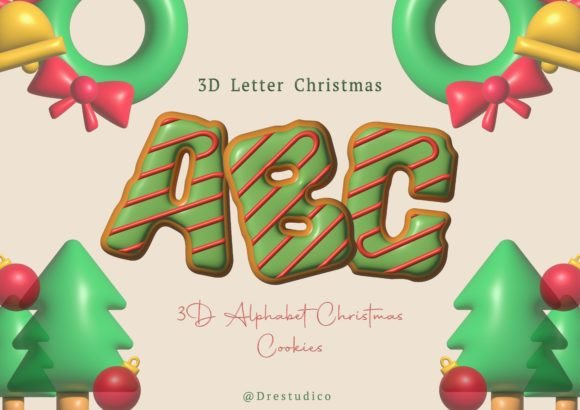
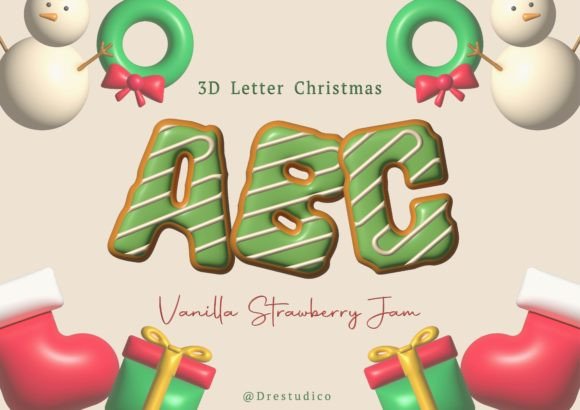
The intersection of nostalgic holiday aesthetics and modern digital fabrication has created a surge in demand for specialized graphic assets. Among these, the Christmas Cookie Green 3D Alphabet stands out as a distinct typographic resource designed specifically for seasonal projects. Unlike standard flat vector fonts, this asset collection leverages rasterized depth and texture to mimic the tactile appearance of baked goods. For creators ranging from small business owners producing merchandise to educators designing classroom materials, understanding the technical specifications and practical applications of this specific PNG set is essential for achieving professional results without the need for complex 3D rendering software.
Technical Specifications and File Integrity
Before integrating any digital asset into a production workflow, it is critical to understand the file architecture. The Christmas Cookie Green 3D Alphabet is distributed exclusively as a high-resolution PNG download. This distinction is vital for users who may be accustomed to working with scalable vector graphics (SVG). Because this product is a raster-based image set at 300 DPI, it captures intricate shading, highlights, and crumb textures that vectors often cannot replicate authentically. However, this also means the files are not editable in terms of node manipulation or color separation within vector software like Adobe Illustrator or Cricut Design Space.
The 300 DPI resolution ensures that when printed at standard sizes, the edges remain crisp and the internal textures do not appear pixelated. Each letter from A-Z, along with numbers 0-9, is delivered as an individual file with a transparent background. This transparency is the key functional feature, allowing designers to layer the typography over patterned backgrounds, photographs, or solid colors without needing to perform manual masking or background removal. The inclusion of nine bonus 3D Christmas Edition icon PNGs further extends the utility of the set, providing complementary visual elements that match the typographic style perfectly.
Raster vs. Vector Considerations for Holiday Typography
Users must recognize that because this is not an SVG file, resizing requires caution. While 300 DPI allows for significant enlargement, stretching the image beyond its native dimensions will result in quality loss. This asset is best suited for projects where the final print size is known or falls within the safe scaling range of the original file. For sublimation printing, where ink absorption can sometimes soften fine details, starting with a high-density raster file like this often yields superior textural realism compared to converting a flat vector into a faux-3D effect.
Sublimation and Physical Product Applications
One of the primary use cases for the Christmas Cookie Green 3D Alphabet is in the creation of sublimated goods. Sublimation relies on heat transfer to embed dye into polymer-coated surfaces, and the success of the transfer depends heavily on the vibrancy and clarity of the source image. The "cookie green" color palette is specifically calibrated to evoke traditional holiday baking, making it ideal for personalized mugs, tumblers, and ceramic ornaments.
When designing for curved surfaces like mugs, the individual PNG format offers superior flexibility over pre-arranged word art. Designers can adjust the kerning and baseline shift of each letter manually to accommodate the curvature of the vessel. The 3D nature of the alphabet adds perceived volume to flat products; a white ceramic mug featuring this green cookie typography appears to have physical dimension even though the surface remains smooth. This optical illusion enhances the perceived value of handmade or custom-printed items.
- Ceramic Mugs and Tumblers: Utilize the full A-Z set to create monograms or family names where the cookie texture contrasts against white or metallic drinkware.
- Garden Flags and Plaques: The high contrast of the green against outdoor materials makes this alphabet legible and festive for exterior holiday decor.
- Apparel and Textiles: When sublimating onto polyester fabrics, the detailed shading of the 3D letters prevents the design from looking like a flat sticker, integrating more naturally with fabric weaves.
Digital Design and Print Media Integration
Beyond physical manufacturing, this alphabet set serves as a robust tool for digital and paper-based media. In an era where digital invitations often lack the warmth of physical stationery, incorporating textured 3D typography bridges the gap. For event planners and hosts, using the Christmas Cookie Green 3D Alphabet in digital invites sets a playful, culinary tone before guests even arrive. The transparent backgrounds allow these letters to be placed directly onto digital photo backdrops or integrated into email marketing headers without awkward white boxes disrupting the layout.
For scrapbookers and memory keepers, this asset provides a cohesive titling solution that matches the thematic elements of holiday photography. Traditional scrapbooking often involves physical stickers or die-cuts; this digital equivalent allows for hybrid scrapbooking where digital layouts are printed and assembled physically. The consistency between the alphabet and the nine bonus icons enables creators to build complete page themes without sourcing mismatched elements from different designers. Educators and homeschoolers also find utility in this set for creating festive literacy materials, such as alphabet matching games or holiday-themed spelling worksheets, where the engaging visual style helps maintain student interest during seasonal breaks.
Optimizing Layouts for Non-Editable Files
Since the files are finished PNGs and not editable vectors, layout planning must occur in the composition phase rather than the creation phase. Designers should treat each letter as a fixed photographic element. When composing words, attention to negative space is crucial. The 3D extrusion on the letters creates natural shadows and depth that occupy more visual space than flat type. Overlapping letters can create clutter unless done intentionally to simulate a pile of cookies. Using grid guides in software like Photoshop, Canva, or Affinity Photo helps maintain alignment while respecting the organic, irregular edges characteristic of cookie-style typography.
Color Theory and Seasonal Branding Consistency
The specific hue designated as "Christmas Cookie Green" carries psychological weight in design. It differs from bright lime or deep forest green; it typically sits in a mid-tone, warm spectrum associated with icing, mint, and traditional confectionery. When utilizing this alphabet for branding or commercial products, pairing it with appropriate supporting colors is necessary to maintain aesthetic integrity.
Complementary pairings include warm whites, chocolate browns, and soft reds. Avoiding neon or overly saturated synthetic colors prevents the cookie aesthetic from appearing artificial. For business owners using this asset for seasonal packaging or social media graphics, consistency is key. If the alphabet is used for a "Happy Holidays" banner, the same green tone should ideally appear in other design elements like borders or secondary icons. The included bonus icons facilitate this color matching automatically, removing the guesswork of sampling and adjusting hex codes across different assets.
Licensing, Usage Rights, and Commercial Viability
Understanding the scope of usage for digital downloads is as important as the technical application. As a digital file with no physical shipment, immediate access allows for rapid turnaround times, which is critical during the condensed holiday production season. Users must verify the specific license agreement attached to their purchase regarding commercial versus personal use. Generally, printable PNG sets are licensed for creating end products rather than reselling the digital files themselves.
For entrepreneurs selling sublimated mugs or custom cards, this alphabet represents a time-saving investment. Creating authentic-looking 3D food typography from scratch requires advanced illustration skills and hours of rendering time. By utilizing a pre-made, high-quality asset, creators can focus on customization and customer service rather than asset generation. However, ethical design practice dictates that the alphabet should be part of a larger, unique composition. Simply placing a single letter on a product without additional design elements may violate terms of use depending on the licensor and rarely results in a compelling retail product.
File Management and Workflow Efficiency
Managing a set of 35+ individual high-resolution PNG files requires organized digital housekeeping. Creating dedicated folders for the alphabet, numbers, and bonus icons prevents workflow friction during active design sessions. Renaming files to include descriptive tags (e.g., "CookieGreen_A_Upper.png") can speed up search functions within design software asset libraries. Since these are raster files, maintaining backups of the original downloads is mandatory. Repeated saving and exporting in some image editors can degrade quality over time; always work from a fresh copy of the master file for new projects to ensure the 300 DPI integrity remains intact throughout the production lifecycle.
Maximizing Visual Impact Through Layering
The true potential of the Christmas Cookie Green 3D Alphabet is unlocked through strategic layering. Because the background is transparent, these letters interact dynamically with underlying textures. Placing the cookie letters over a subtle flour dust texture or a gingham tablecloth pattern enhances the realism of the bakery theme. In digital compositions, adding a drop shadow beneath the PNG letters can further ground them in the scene, although the built-in 3D shading often suffices for most applications.
For framed art prints, consider the interplay between the matte finish of the paper and the glossy appearance suggested by the icing-like texture of the alphabet. Printing on luster or semi-gloss paper can enhance the dimensional illusion created by the digital file. Conversely, printing on matte cardstock gives the letters a softer, more rustic appearance akin to actual shortbread. Understanding how print substrates interact with digital textures allows creators to tailor the final output to the specific emotional response they wish to evoke, whether that is polished elegance or homemade comfort.